The right format depends on more than whether you want a full-colour package. Compare the container shape, application line, film behaviour, waste route and artwork requirements before you approve a label specification, then validate the choice on your actual production equipment.
Key takeaways
- Choose BOPP for regular cylinders and precise barcode placement.
- Choose shrink sleeves for shoulders, curves, handles and recessed surfaces.
- Measure the container, overlap, seam and label panel before requesting quotes.
- Compare material, application labour, rejects, tooling and end-of-life requirements.
Choose the format by container, cost and production risk
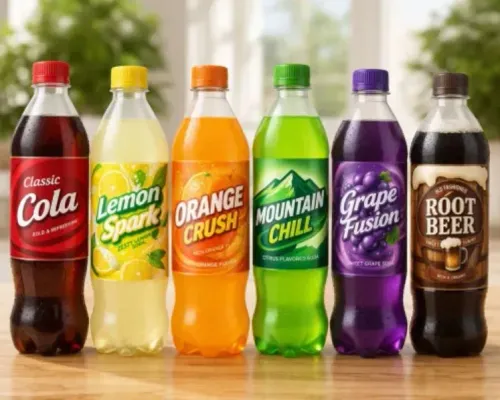
Choose BOPP wrap-around labels for a regular cylindrical bottle when barcode accuracy, small text and predictable placement matter more than full-body graphics. Choose a shrink sleeve when the container has shoulders, curves, recessed areas or a handle that a flat label cannot cover cleanly.
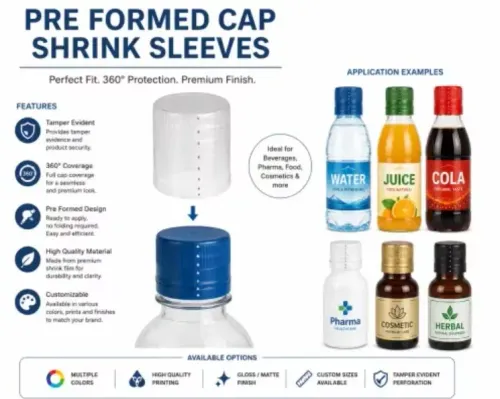
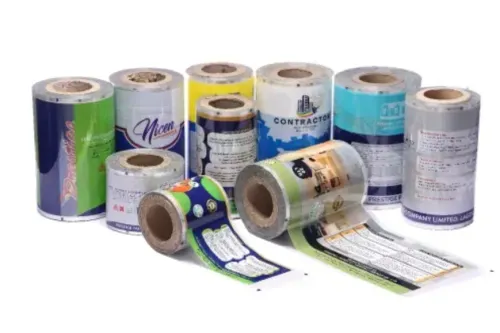
BOPP wrap-around labels or shrink sleeves in Nagpur are different converting systems, not interchangeable names. A BOPP label is cut from roll-fed film and fixed with adhesive, usually at a glued overlap. A sleeve is seamed into a tube, fitted over the container and shrunk in a steam or hot-air tunnel.
| Format | Best fit | Cost and production risk |
|---|---|---|
| BOPP wrap-around label | Straight-sided, stable cylindrical containers | Usually lower application complexity, less process equipment and faster changeovers; diameter variation, condensation and poor overlap control cause skew or lifting |
| Shrink sleeve | Tapered, contoured or full-body containers | Higher film and equipment cost; tunnel temperature, conveyor speed, dwell time, seam position and artwork distortion add control points |
| BOPP label | Small text, fixed graphics and verified barcodes | Dimensional stability reduces registration risk and supports efficient material use |
| Shrink sleeve | Premium graphics, tamper coverage or maximum decoration | Strong visual coverage, but trimming, seam defects and shrink distortion create more waste |
For BOPP labels in Nagpur, request the bottle drawing, adhesive type, overlap width and application temperature—not only label dimensions. For shrink sleeves in Nagpur, require an actual line trial with the defined tunnel settings. Hand-applied samples do not reveal sleeve registration, barcode distortion or machine changeover risk.
Match the label to the bottle and measure it correctly
A label that fits the circumference can still fail on a tapered, wet, or unstable bottle. Measure the container at the exact application temperature and inspect the surface where adhesive or sleeve film will sit.
- Use a bottle drawing showing maximum and minimum diameter, height, shoulder radius, base radius, taper and any recessed panel, handle or grip.
- For a BOPP label, calculate cut length as the wrap circumference plus the specified glued overlap. State acceptable diameter variation, label width, overlap width, roll direction, core and winding direction.
- Check surface energy, texture, mould seams, dust, oil and condensation. A cold bottle taken from storage can defeat adhesive even when the film and dimensions are correct.
- Record the application temperature and confirm that the bottle remains rigid under line pressure. Flexible containers can buckle, while a heavy taper can make the label lift or drift.
Straight-sided cylinders with dry, smooth surfaces suit wrap around labels in Nagpur. A taper requires matched top and bottom diameters and a trial to confirm that the overlap does not spiral; shoulders and deep contours usually create lifting or wrinkles.
Shrink sleeves suit irregular contours, shoulders and full-circumference graphics, but measure sleeve layflat, finished height, seam position and shrink percentage. Specify steam or hot-air temperature zones, cooling time, registration to the bottle or cap and artwork distortion compensation.
Otherwise a barcode can curve, a seam can move into the front panel, or graphics can finish above the intended panel.
Compare the application line, labour and common failures
BOPP wrap-around labels need a roll-fed labeller, controlled adhesive delivery, a pressure belt and overlap sensors. Shrink sleeves need a sleeve applicator, cutting and registration controls, plus a steam or hot-air tunnel. The second line requires more setup skill.
| Control point | BOPP wrap-around label | Shrink sleeve |
|---|---|---|
| Application | Adhesive pattern, roll direction, tension and overlap | Cut length, seam position, registration and sleeve layflat |
| Container fit | Straight, stable cylindrical surfaces | Shoulders, curves, handles and full-body coverage |
| Thermal control | Not required for application | Tunnel temperature, conveyor speed and dwell time |
| Main defect | Wrinkles, open seams or glue squeeze-out | Skewed seams, fish-eyes, bridging or distorted graphics |
For shrink sleeves in nagpur, record the tunnel temperature profile rather than accepting a supplier’s single temperature figure. Run the actual bottle at the intended conveyor speed, then inspect cooling, cap registration and shrink uniformity.
Prevent repeatable defects with these controls:
- Trial every format on the production container; hand-applied samples do not prove line performance.
- Verify barcodes after application, inspect the seam or overlap, and test scuffing and ink rub after conditioning.
- Approve a colour proof with target values, maximum repeat-to-repeat variation, retained reference samples and a written splice policy.
- Check adhesive temperature, nozzle cleanliness and pressure-belt alignment at every BOPP changeover.
- Check sleeve cut length, registration marks, tunnel airflow and bottle spacing at every sleeve changeover.
Keep labour records for roll loading, glue cleaning, sleeve threading, tunnel adjustment and format changeovers. Those minutes, plus rejected containers, often outweigh the quoted label price.
Specify film, artwork and end-of-life requirements
Specify the resin before approving “clear film.” BOPP suits straight-sided containers when you want a low-profile label and PP-compatible recycling; PVC and PET-G suit shrink sleeves, but their shrink force, density, haze, gloss and recovery behaviour differ.
| Film | Specify | Main risk |
|---|---|---|
| BOPP | Thickness, corona treatment, adhesive type, coat weight, overlap width and gloss | Poor surface energy or incorrect adhesive causes lifting, tunnelling or glue squeeze-out |
| PVC | Thickness, shrink curve, haze, gloss, seam adhesive and tunnel temperature | PVC contamination can compromise PET recycling |
| PET-G | Thickness, shrink range, shrink-force curve, haze, gloss and seam specification | PET-G sleeves can interfere with PET bottle recycling unless removed |
Ask for a colour proof, named colour standard or target values, barcode verification method, maximum repeat-to-repeat variation, splice policy and a retained reference sample. Distortion compensation belongs in the sleeve artwork, especially around shoulders, handles and tapered panels.
Reserve readable space for product identity, net quantity, manufacturer or packer details, consumer-care information, batch or lot number and applicable date declarations. Check the current Legal Metrology (Packaged Commodities) Rules and product-specific rules before plates or cylinders are made.
For BOPP labels in Nagpur, confirm adhesive performance after condensation, monsoon storage and scuff testing. For shrink sleeves in Nagpur, specify registration to the bottle or cap, seam position and steam or hot-air settings. Crystal Vision Packaging Co can use the same approved artwork and retained sample to control repeat orders across both formats.
Build an RFQ and trial that produces a reliable landed comparison
A reliable RFQ must force every supplier to price and prove the same specification. Do not compare a roll price with a delivered sleeve price, or a hand-applied sample with a machine trial.
1. Send the bottle drawing, artwork, quantity, delivery location, label dimensions, roll width, core diameter, winding direction and required delivery date. State whether the format is adhesive-overlap BOPP or seamed shrink sleeve.
2. Request film grade and thickness, adhesive type, application-temperature range, sleeve layflat, seam position, ink system, proofing method, colour standard or target values, maximum repeat-to-repeat variation, barcode verification method, splice policy and a retained production reference sample.
3. Require a landed quotation showing film, plates or cylinders, tooling, packing, freight, insurance, taxes, minimum order quantity, wastage allowance and lead time. Use identical terms when comparing BOPP wrap around labels or shrink sleeves in Nagpur with wrap around labels Punjab.
4. Run samples on the actual container and application line, not by hand. Record speed, adhesive temperature and overlap for BOPP; record tunnel temperature profile, conveyor speed and dwell time for sleeves.
5. Accept the trial only after visual inspection following conditioning, barcode verification, seam or overlap inspection, scuff testing and ink-rub testing. Check placement after condensation and warehouse exposure.
| Cost line | Nagpur quote | Alternative quote |
|---|---|---|
| Material, tooling and freight | Same bottle, artwork and quantity | Same basis |
| Application trial | Actual line result | Actual line result |
| Delivered cost per thousand | Include all charges | Include all charges |
A search result labelled “wrap around labels Punjab” proves nothing about price or performance. Film availability, monsoon storage, machine compatibility and freight can reverse the apparent saving. Record rejects, changeover time and usable labels per roll before choosing.
Frequently asked questions
When should you choose BOPP wrap-around labels instead of shrink sleeves?
Choose BOPP wrap-around labels for regular cylindrical bottles when barcode accuracy, small text and predictable placement matter more than full-body graphics.
When are shrink sleeves the better packaging format?
Choose shrink sleeves when the container has shoulders, curves, recessed areas or a handle that a flat label cannot cover cleanly.
What should you measure before ordering a wrap-around label or shrink sleeve?
Measure the bottle circumference, usable label height, panel shape, seam or overlap area, shoulder and base transitions, and the position of the barcode and other critical artwork.
What should an RFQ compare for BOPP labels and shrink sleeves?
Compare film type and thickness, print process, roll or reel specifications, application equipment, labour, setup or tooling, expected reject rate, delivery terms and end-of-life requirements.