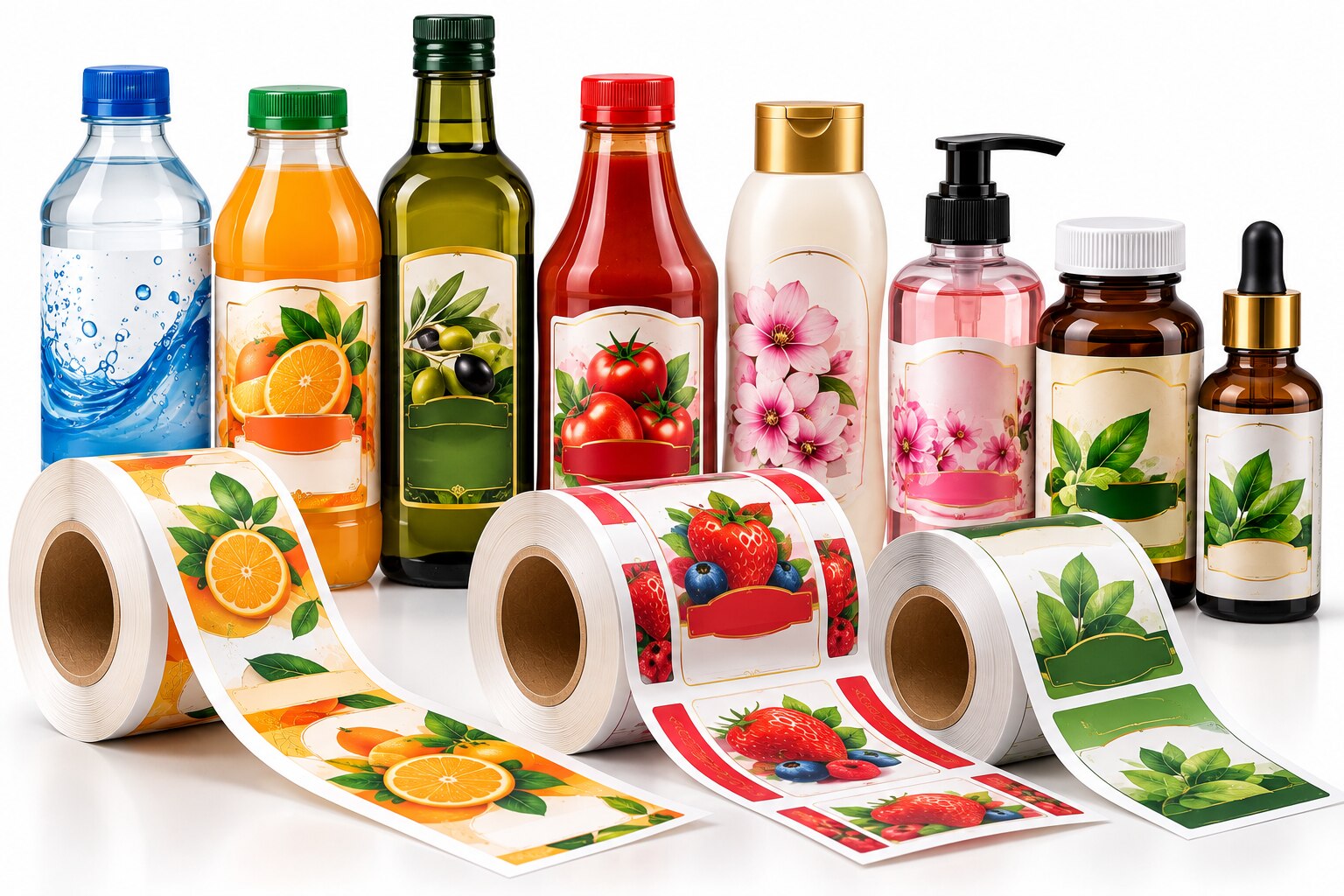
The right choice depends on the bottle’s geometry, the application line, the pack environment, and whether you need full-body decoration or tamper evidence. By comparing those factors before requesting quotes, you can specify the correct material, delivery format, trials, and acceptance tests for bottles filled and packed in Kanpur.
Key takeaways
- Use BOPP for stable round bottles and shrink sleeves for sharply changing diameters.
- Approve labels on filled bottles, checking seams, wrinkles, scuffing, and adhesion.
- Specify ink, food-contact compliance, recycling conditions, dimensions, and application speed.
- Put artwork, materials, tolerances, samples, delivery terms, and support contacts in writing.
Which bottle shapes and production lines suit BOPP or shrink sleeves?
BOPP suits a stable round or gently tapered cylinder; shrink sleeves suit bottles whose diameter changes sharply. For bopp wrap around labels or shrink sleeves kanpur buyers, the filled bottle—not a flat drawing—should decide the format.
| Option | Bottle shape | Production-line fit | Main limitation |
|---|---|---|---|
| BOPP wrap-around | Round or gently tapered; clear front and back panels | Roll-fed, glue-applied, pressure-sensitive, or manual application without heat | Cannot follow deep recesses, handles, waists, or strong shoulders |
| Shrink sleeve | Strong taper, oval section, grip panels, handles, recesses, shoulders, or changing diameters | Sleeving and cutting equipment followed by a steam or hot-air tunnel | Adds tunnel setup and can distort printed artwork |
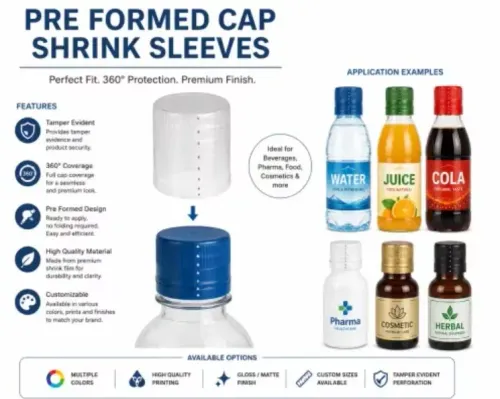
Choose a sleeve for full coverage or a tamper-evident band extending over the cap. Choose BOPP when you lack a shrink tunnel, need lower heat exposure, or want simpler label removal for recycling.
A full sleeve wastes material when the pack only needs a small information panel; BOPP fails when the surface has deep contours or cap-to-body tamper evidence.
Check the filled bottle at the base, shoulder, neck, and cap clearance. Record circumference, taper, shoulder radius, recesses, and the intended seam or overlap position.
Before comparing quotations for BOPP wrap around labels Kanpur, confirm the application method and line conditions:
- Roll-fed equipment needs controlled web tension, registration, bottle spacing, and rotation.
- Glue application needs adhesive compatibility and a dry, dust-free surface.
- Condensation, oil, or chilled plastic can cause lifting seams and skew.
- Manual application does not prove production-speed performance.
Approve samples on the actual line, not only by inspecting flat labels.
What application details prevent seams, wrinkles, and label failure?
A precise application brief prevents a good design from failing on the line.
| Option | Application format | Main equipment |
|---|---|---|
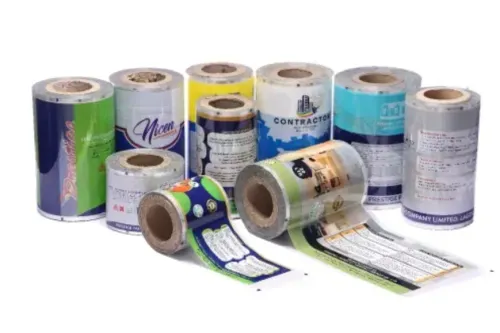
| BOPP | Flat web or individual labels wrapped around the bottle | Roll-fed, glue-applied, pressure-sensitive, or manual applicator |
| Shrink sleeve | Seamed tube cut and placed over the bottle | Sleeve cutter, sleeving unit, and steam or hot-air tunnel |
For BOPP bottle labels Kanpur buyers should specify:
- Roll direction, web tension, core size, winding direction, adhesive type, label overlap, and seam position
- Bottle spacing, rotation control, line speed, and registration tolerance
Clean, dry bottles give adhesive a reliable surface. Condensation, dust, oil, or chilled plastic can cause edge lift, open seams, skew, or adhesive squeeze-out.
For shrink sleeves Kanpur buyers should provide bottle circumference at each height, including the base, body, shoulder, and neck. Calculate sleeve layflat from the largest required diameter plus seam allowance. Request the shrink curve by temperature and direction, not one headline shrink percentage.
Run steam and hot-air tunnel trials separately, recording tunnel temperature, dwell time, conveyor speed, and bottle orientation. Approve filled bottles at production speed, then inspect the base and shoulders for incomplete shrinkage, bridging, wrinkles, fish-eyes, bubbles, seam splitting, scorching, and distortion.
A sleeve that shrinks too early can bridge a shoulder; one needing excessive heat can damage the bottle or ink. Choose the format your equipment can actually apply.
How do print, food compliance, and recycling requirements change the choice?
BOPP usually gives stable print dimensions, fine text, strong barcode contrast, metallic effects, transparent windows, and lower heat exposure. Sleeve artwork needs distortion compensation: logos, nutrition panels, and barcodes stretch around shoulders and compress in high-shrink zones.
Place the barcode on a comparatively stable panel, preserve its quiet zone, and scan it on the finished bottle after chilling and handling. This matters for bottle labels Kanpur buyers specify for cold-chain, beverage, or refrigerated food packs.
| Material | Compare on | Main decision point |
|---|---|---|
| BOPP | 30–50 micrometres, clarity, stiffness, adhesive performance | Stable cylinder and lower heat exposure |
| PETG, PVC, OPS, polyolefin | 40–60 micrometres, shrink force, clarity, scuff resistance, seam strength | Shaped bottles, full coverage, or tamper evidence |
| Sleeve construction | Gauge, recycling route, tunnel behaviour | Performance, not price per kilogram |
For wrap around labels for food Kanpur production, request declarations for film, inks, varnishes, and adhesives covering direct or indirect contact, temperature limits, migration documentation, curing, and set-off. Apply the Food Safety and Standards (Packaging) Regulations, 2018 to the finished pack; “food-grade” alone proves nothing.
Check three recycling questions before approval:
- Does the sleeve float or sink in the intended recycling stream?
- Can the sleeve be removed from the bottle?
- Does alkaline bottle washing remove adhesive and ink without contamination?
Confirm these points with the actual PET, HDPE, or other bottle system. A visually superior sleeve can become the wrong choice if its material disrupts sorting or washing.
What should you put in the quotation and approval checklist?
Send an identical enquiry to every supplier. Include:
1. A bottle drawing or physical sample, filled-bottle dimensions, resin and colour, circumference at multiple heights, label or sleeve dimensions, artwork file, print colours, varnish, barcode, application method, line speed, monthly volume, storage and transport conditions, packing date or coding method, and required test samples.
2. Ask for trial rolls or sleeves before volume approval. Test label placement tolerance, overlap or seam visibility, adhesion after condensation and ice-water exposure, oil contact, scuff and rub resistance, barcode scanning, mandatory-text legibility after chilling, sleeve shrink uniformity, and carton or transport abrasion.
3. Request a production-bottle line trial at the intended speed and tunnel settings, not only a flat print proof. Record artwork approval time, cylinder or plate implications where applicable, minimum order quantity, changeover waste, operator adjustments, tunnel setup, film storage, and repeat-order consistency in the schedule.
For bopp wrap around labels kanpur or shrink sleeves kanpur, add roll direction, core, roll length, tolerance, adhesive or seam specification, and packing configuration. Approve only after the filled bottle passes the actual application and handling tests.
A low quotation becomes expensive when the wrong roll direction, sleeve diameter, adhesive, or shrink curve creates rejected bottles and extended changeovers. The supplier must reproduce the approved trial, not merely match a flat print proof.
How should you buy bottle labels for delivery and support in Kanpur?
A Kanpur purchase has four separate service questions: where labels are manufactured, how they reach your plant, who installs or adjusts the applicator, and whether the supplier will attend an on-site line trial.
Search terms such as bottle labels kanpur and shrink sleeves kanpur identify a location, not stock or installation coverage. Ask for a written route and lead-time assumptions covering artwork approval, sampling, production, dispatch, and repeat orders.
| Option | Specify before comparing quotes | Main production risk |
|---|---|---|
| BOPP wrap-around labels | Film and gauge, print process, dimensions, core, roll length, overlap tolerance, adhesive, coding compatibility | Wrong roll direction, tension, seam, or adhesive causes wrinkles and open labels |
| Shrink sleeves | Film and gauge, tube dimensions, seam tolerance, shrink curve, coding compatibility | Incorrect diameter or tunnel settings cause bridging, distortion, or seam splitting |
Compare Crystal Vision Packaging Co with other candidates on that same schedule, not on distance from Kanpur. Ask who pays for trial material, line stoppage, rejected packs, and a remake if the approved sample fails production testing.
For bopp wrap around labels or shrink sleeves kanpur, require written answers to these four questions:
- Where is manufacture completed, and what dispatch point feeds Kanpur?
- Which carrier, route, packaging, and delivery lead time apply?
- Who installs or adjusts the labeler, sleeve cutter, steam tunnel, or hot-air tunnel?
- Will a named technician attend the Kanpur line trial at production speed?
Choose the supplier that documents construction, reproduces the approved bottle trial, and supports the actual route from manufacture to application—not simply the supplier quoting nearest to your plant.
Related products
 | BOPP Wrap Around Labels BOPP Wrap Around Labels in Nagpur BOPP Wrap Around Labels are made from Biaxially Oriented Polypropylene (BOPP) film that wraps completely around bottles and containers. View product → |
 | PET Shrink Labels PVC / PET-G Shrink Sleeves in Nagpur PVC Shrink Labels are flexible plastic labels made from Polyvinyl Chloride (PVC) that shrink tightly around a product when heat is applied. View product → |
Frequently asked questions
Which bottle shapes suit BOPP wrap around labels or shrink sleeves in Kanpur?
BOPP suits stable round or gently tapered cylinders. Shrink sleeves suit bottles with sharp shoulders, waists, handles, or major diameter changes.
What application checks prevent seams and wrinkles on bottle labels?
Test labels on filled production bottles and record bottle dimensions, overlap position, line speed, adhesive or shrink temperature, tunnel settings, and inspection tolerances.
How do food compliance and recycling affect the label choice?
Confirm ink, adhesive, film, and migration documentation for the intended food contact or indirect-contact use. Check whether the label material and coverage interfere with the bottle recycling stream.
What should a bottle-label quotation include?
Request the film or paper grade, thickness, adhesive, print process, colours, dimensions, roll or piece format, core size, winding direction, quantities, tolerances, cylinder or plate charges, delivery schedule, samples, and replacement terms.
How should you buy bottle labels for delivery in Kanpur?
Share filled-bottle samples or accurate drawings, approve a production proof, confirm packing and delivery dates, and name a support contact for application trials and complaints.
Related product
 | Shrink Labels PVC Printed Labels Manufacturer in Nagpur | Crystal Vision Packaging Co Premium PVC Printed Labels for All Industries in Nagpur, Chandrapur, Amravati & Wardha Looking for high-quality PVC... |
Keywords