Chemical packaging in Mizoram must withstand aggressive contents, monsoon humidity, sunlight, transport vibration, and the information requirements that apply to hazardous products. By the end, you will know how to match a transfer system to the container, define an application trial, test the finished pack, and compare delivered supply costs from Nagpur.
Key takeaways
- Classify the chemical using SDS Sections 2 and 14 before label design.
- Match foil, adhesive, and finish to the container material and surface.
- Approve application temperature, pressure, speed, and dwell time before production.
- Test labelled packs for moisture, abrasion, chemicals, and transport exposure in Mizoram.
Start with the chemical classification and the information the pack must carry
Classify the chemical before choosing the decoration. Record the formulation, concentration, intended use, pack type, and transport status from the Safety Data Sheet, especially Section 2 and Section 14.
The Manufacture, Storage and Import of Hazardous Chemical Rules and the Legal Metrology (Packaged Commodities) Rules can impose different information duties, so bottle size alone is not enough.
Reserve clear, durable space for the information the pack requires:
- GHS pictograms, signal word, hazard statements, and precautionary statements
- Product name, chemical identity, concentration, and net quantity
- Manufacturer or importer name, address, telephone number, and emergency contact
- Batch or lot number, manufacturing date, expiry or retest date, when applicable
- Directions for use, storage instructions, and first-aid or emergency information
- The UN packaging mark and transport details, when the shipment requires approved dangerous-goods packaging
A heat-transfer decoration is not a universal substitute for a hazard label. A UN mark identifies approved transport packaging; GHS communication protects workers and users. Keep both systems legible and separate.
Then check whether the transfer itself can survive the formulation. Ink, protective overprint, carrier-remnant design, and container surface all affect resistance; an unprotected decorative ink can dissolve or smear while the bottle remains intact.
For chemical packaging labels in Mizoram, request exposure testing against the actual solvent, acid, alkali, oil, detergent, pesticide, or other formulation, plus humidity and sunlight. Reject the transfer if it obscures mandatory text, fails that test, or leaves no space for required declarations.
Match the transfer construction to the container and its surface
Do not approve one foil for every bottle resin. A quote found through “heat transfer foils Mizoram” must identify the carrier film and thickness, printable or transfer side, ink system, protective coating, validated application temperature, pressure and dwell time, roll-winding direction, core and roll dimensions, and compatible container resin.
Test adhesion on the actual mould finish and treatment state, not on a glass sample.
| Pack material | Suitable transfer construction | Critical specification or check |
|---|---|---|
| HDPE | Flexible polyolefin-compatible ink and coating on a conformable carrier | Low surface energy demands actual-pack adhesion testing; corona or flame treatment may be needed |
| LDPE | Highly flexible carrier with flexible ink and protective overprint | Confirm the system will not crack, lift or distort as the pack is squeezed |
| PP | Polyolefin-compatible transfer with abrasion-resistant protection | Validate treatment, curvature and pressure; a setting for one PP bottle may fail on another |
| PET | High-resolution transfer with strong adhesion and chemical-resistant overprint | Smooth PET can expose weak ink bonding after solvent or detergent contact |
| PVC | PVC-compatible ink and coating | Test plasticizer migration, softening and edge lifting |
| Glass | Rigid-surface transfer with strong bonding and clean release | Check pressure and heat on the exact finish; decoration is not automatically chemical-proof |
| Metal | Metal-compatible ink, primer where specified, and corrosion-resistant overprint | Test coated and uncoated surfaces separately, including curved areas |
| Fluorinated plastic | Low-surface-energy construction validated for fluorinated resin | Require treatment or primer data and pack-specific adhesion results |
For solvent, acid, alkali, pesticide or oil packs, demand an unprotected-ink and finished-pack exposure test. A successful transfer does not prove chemical resistance.
Set the application window before approving production
Approve production only after a filled, production-equivalent container transfers cleanly at a documented machine setting. Record platen or roller temperature, contact pressure, dwell time, line speed, carrier alignment, and container support; a flat artwork proof cannot reveal distortion on an oval or tapered pack.
1. Clean the application zone with a residue-free solvent approved for the container resin, then let it dry completely. Remove mould-release residue, oil, dust, condensation, and silicone contamination; these cause incomplete transfer and edge lifting.
2. Check surface energy on HDPE, LDPE, and PP with dyne pens or another documented method. If the reading fails the ink-system supplier’s limit, correct the surface with an approved corona, flame, or plasma treatment before transferring.
3. Acclimatise sealed label rolls and containers in the application room. Record temperature and relative humidity, because moisture uptake changes film dimensions, blocking, and adhesion; never run stock straight from a wet or hot transport environment.
4. Run a short matrix around the supplier’s specified temperature, pressure, dwell, and speed. Increase heat or dwell only when transfer is incomplete; excess heat smears ink, distorts the carrier, softens plastic, and can deform a thin bottle. Use firm backing for flexible packs and align the roll to prevent wrinkles and bubbles.
Inspect the cooled pack for missing areas, silvering, registration shift, smearing, and distortion. For heat transfer labels for mizoram, approve the setting on the filled pack at the intended line speed, then lock the recipe and acceptance limits in the production brief.
Test the finished pack against the real Mizoram service conditions
Approve the transferred print only after testing a filled, production-equivalent container. A flat artwork proof cannot reveal stretching on a taper, misregistration on an oval pack, or adhesion loss on a flexible bottle. Record the actual formulation, container resin, transfer settings, and intended service life separately from the chemical’s shelf life.
Use a written qualification protocol that includes:
- Spot exposure and immersion in the actual solvent, acid, alkali, oil, detergent, pesticide, or other formulation. Inspect immediately and after the stated contact period.
- Humidity and condensation exposure, followed by adhesion testing. Include sealed-pack storage and acclimatisation before application, with the agreed temperature and relative-humidity limits recorded.
- Rain or water spray, then drying and a rub test to detect ink lift, whitening, bleeding, or loss of small text.
- Abrasion from handling, stacking, transport, and cap contact. Define the stroke count, load, and pass condition.
- Temperature cycling and sunlight or UV exposure that represent storage and outdoor use. Check colour, barcode readability, cracking, and edge lift afterward.
Set pass criteria before testing: no missing mandatory text, readable barcode, no smearing, no blistering, and adhesion that survives the specified tape or rub method. Repeat failures after ageing; a pass before exposure proves little.
For heat transfer labels for Mizoram, climate exposure belongs in the approval record, not in a generic “waterproof” claim. A search for chemical packaging labels mizoram should lead to evidence tied to the exact pack and formulation.
Give the converter a complete brief and compare delivered cost
Send the converter one production brief, not a product name. Include:
- Chemical name and concentration, hazard classification, batch and expiry data, barcode type, and minimum text size.
- Container resin, fluorination status, capacity, filled-pack weight, dimensions, taper, ovality, surface texture, and mould-release history.
- Artwork at production dimensions, distortion compensation, print colours, protective overprint, variable-data position, and the required retained sample.
- Application machine, contact pressure, dwell time, temperature, line speed, roll direction, core size, and monthly quantity.
- Sealed-pack storage, acclimatisation time, and acceptable temperature and relative-humidity limits for Mizoram.
“Heat transfer foils Mizoram” is not a sufficient specification. Name the carrier and thickness, printable side, ink system, coating, application temperature and pressure, roll winding, roll dimensions, and resin compatibility.
Compare heat transfer labels in Nagpur with alternatives on delivered cost, not conversion price:
| Option | Compare on | Cost often missed |
|---|---|---|
| Nagpur converter | Freight, moisture barrier, trial support, replacement lead time | Rejected packs and emergency replenishment |
| Northeast supplier | Minimum order, stock availability, transit time | Higher unit price offset by shorter delivery |
| Distant low-price supplier | Freight, damage risk, payment terms | Leakage claims and obsolete printed stock |
Ask Crystal Vision Packaging Co to quote the same specification and Incoterm as every alternative. Reject any quote that excludes freight, protective packing, application trials, or replacement terms.
Related products
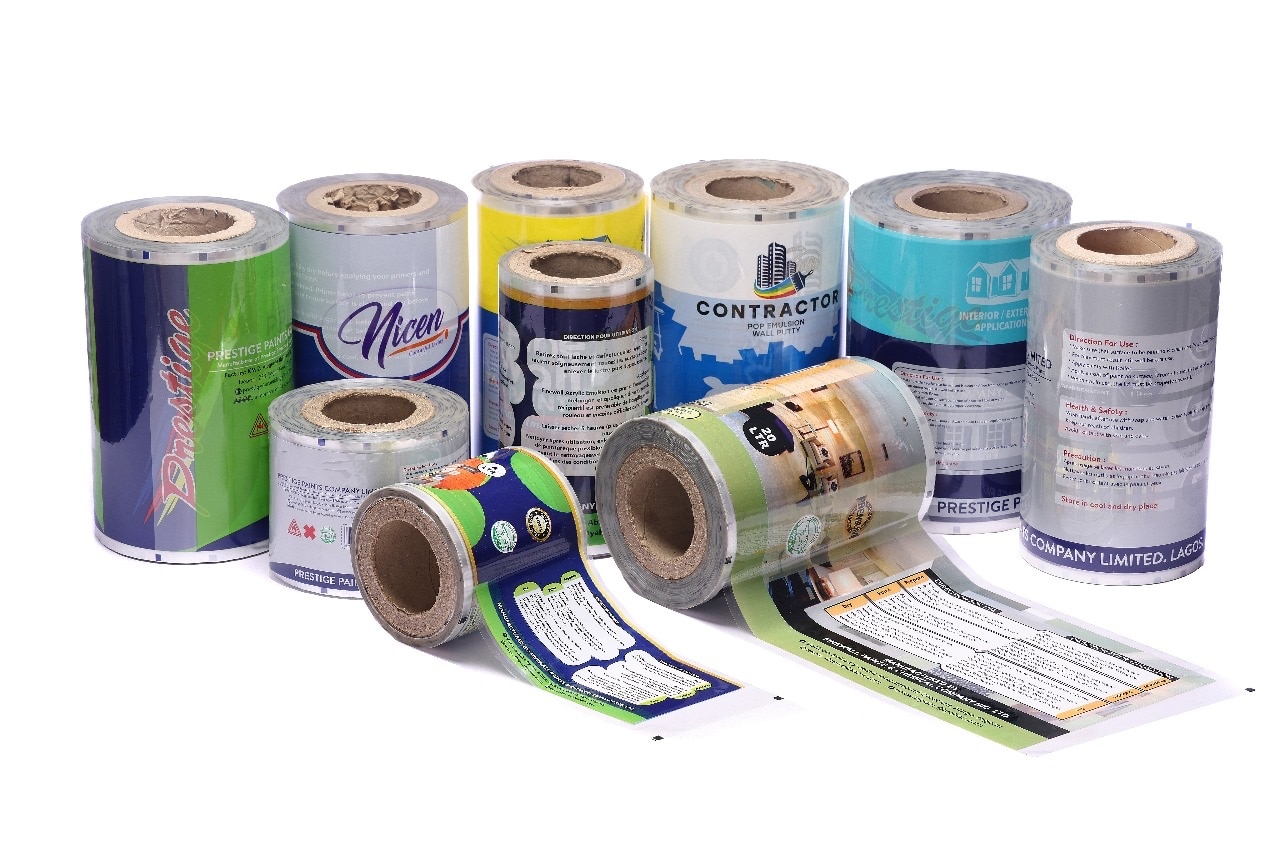 | Heat Transfer Labels ₹0.50 Heat Transfer Labels are decorative labels applied to products using heat and pressure, transferring the printed design directly onto the surface. View product → |
 | Self Adhesive Labels Self Adhesive Labels In Nagpur Self Adhesive Labels are pressure-sensitive labels that stick to surfaces without the need for heat, water, or additional glue. View product → |
Frequently asked questions
What chemical information must appear on a pack?
Start with the formulation, concentration, intended use, pack type, and transport status. Check SDS Section 2 for hazards and Section 14 for transport information, then confirm the required product name, hazard communication, batch details, quantity, and supplier information.
How do you match heat transfer construction to a chemical container?
Identify the container material, surface shape, texture, curvature, and release risk. Select the transfer foil, adhesive system, and protective finish that bond to that surface and resist the packed chemical.
Which application settings should you approve before production?
Set and document the application temperature, pressure, machine speed, dwell time, and cooling or curing interval. Approve samples made within that window before releasing the production run.
What tests should chemical labels undergo in Mizoram?
Test the finished pack against moisture, rain, heat, humidity, abrasion, chemical contact, stacking, and transport handling. Inspect adhesion, legibility, edge lift, cracking, and colour change after exposure.
What should you include in a converter brief?
Provide the container specifications, artwork, chemical details, label dimensions, application equipment, service conditions, performance tests, annual volume, delivery location, and acceptance criteria. Compare delivered cost, including tooling, setup, wastage, freight, testing, and rework.
Keywords