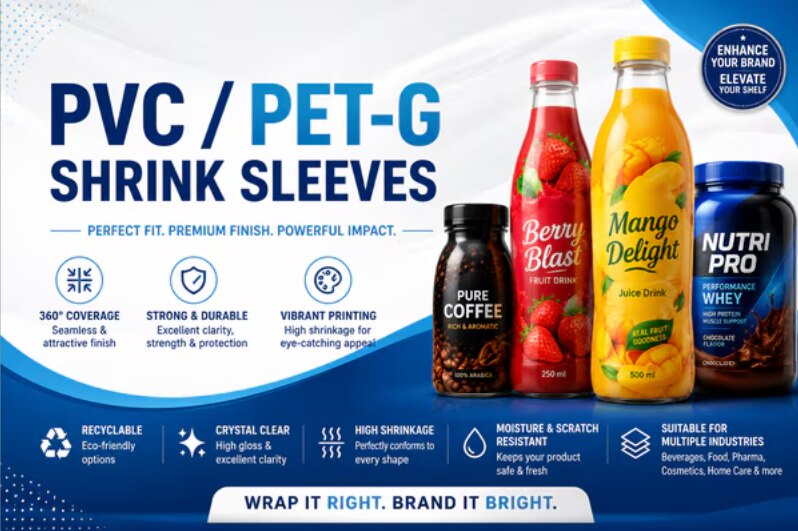
Wrinkles in a shrink sleeve rarely come from one fault alone. Bottle geometry, sleeve dimensions, seam quality, film shrink behaviour, tunnel heat, airflow, conveyor speed and storage conditions all affect the finished pack; by checking them in sequence, you can separate an application error from a poor film match and approve a stable production run.
Key takeaways
- Classify wrinkles by location before changing tunnel temperature.
- Match sleeve diameter, material and perforations to the bottle profile.
- Control sleeve placement, heat exposure and cooling as one sequence.
- Test finished packs after transport and compare them with alternative labels.
Start with the wrinkle’s location, not the tunnel temperature
Classify the wrinkle by location before touching tunnel settings: its pattern usually identifies the failure point faster than the machine display does.
1. Trace a longitudinal fold from top to bottom. It points to trapped air, excessive layflat, poor film conformity, low or uneven heat, or a sleeve pulled out of square. Check whether the sleeve is centered, whether the seam runs parallel to the bottle axis, and whether the applicator stretched the film.
2. Look for a circumferential ring. If it follows a shoulder, rib, neck, or sudden diameter change, the sleeve is struggling to conform to the container’s shape. Measure the bottle profile rather than increasing heat.
3. Inspect star-shaped creases at the base or shoulder. They indicate local stress or a mismatch between the film’s shrink ratio and the container geometry. Request the film’s machine-direction and transverse shrinkage data.
4. Check the seam separately. An uneven overlap, excess adhesive or solvent, incomplete bonding, excessive web tension, or a slanted seam creates a hard ridge that the tunnel magnifies.
5. Watch the first heating zone. A wet or condensed bottle, wet conveyor, excessive airflow, or a loose sleeve can shift the label before shrinking. Correct application and surface conditions first; change settings only after these checks.
This method separates equipment faults from shrink sleeve problems. It is especially useful for pet shrink sleeves for nagaland wrinkling problems, where “PVC PET shrink sleeves Nagaland” can wrongly group different polymers with different shrink curves.
Match the sleeve to the bottle before you print it
A sleeve that fits the bottle at its widest point can still wrinkle at the shoulder. Match the film’s shrink curve to every diameter change before approving artwork or tooling, then test a transparent prototype on the actual bottle.
1. Confirm the film type. Most high-shrink “PET” sleeves are PETG, not bottle-grade PET. PETG grades often deliver about 70–80% transverse shrinkage, while many PVC grades deliver about 40–60%. Treating PVC and PETG as interchangeable can leave loose panels, distort the neck, or create rings.
This distinction matters when comparing PVC PET shrink sleeves Nagaland suppliers offer.
2. Map the container. Record the maximum body diameter, minimum diameter, shoulder angle, rib depth, undercuts, heel support and label height. A sharp diameter change can exceed the film’s ability to contract smoothly, so avoid it or select a shrink curve designed for that shape.
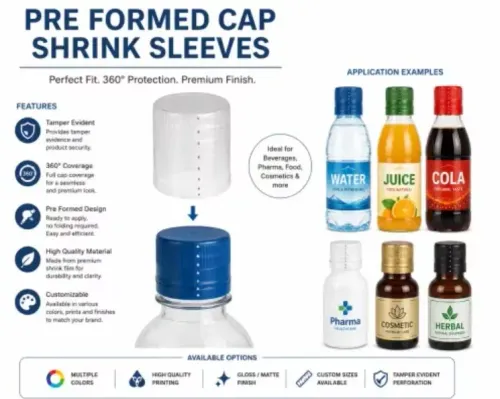
3. Size the sleeve. Set the lay-flat width from the bottle’s largest circumference, allowing enough clearance for application without excessive slack. The finished sleeve diameter is approximately twice the lay-flat width divided by 3.14; verify seam overlap and longitudinal shrink with the converter.
4. Choose the shrink target. Do not specify only “high shrink.” Request transverse and machine-direction shrinkage, shrink-onset temperature, peak-shrink data and shrink force. Compare those figures with the bottle material—PET, HDPE, glass or polypropylene—and its heat tolerance.
5. Test the exact roll and bottle at three heat settings and three line speeds. Measure uncovered areas, diagonal movement, neck or base distortion, seam ridge height and crease count before approving PET shrink labels Nagaland production.
Apply, heat and cool the sleeve in a controlled sequence
A repeatable line sequence keeps shrink sleeves Nagaland brands apply to PET bottles from shifting before heat reaches the film. Hold sleeve dimensions, bottle orientation, line tension and tunnel airflow constant while testing settings; changing several variables at once hides the cause.
1. Measure the bottle’s maximum circumference and set the sleeve lay-flat width to fit without excessive slack. Cut a clean bottom edge, place the seam parallel to the bottle axis, and align the artwork registration mark with the bottle’s front.
2. Centre the sleeve over the neck and base, then check that its lower edge sits at the same height on every bottle. Use a guide or star wheel to prevent rotation; a loose sleeve can inflate under high-velocity air and fold before shrinking.
3. Feed bottles into a preheated steam or hot-air tunnel with steady spacing. Start with moderate heat, airflow and conveyor speed, then compare three speeds and three heat settings while keeping the sleeve and bottle unchanged.
4. Set dwell time long enough for the film to conform around shoulders, ribs and the base without forcing excessive shrink. Map temperature along the bottle path with indicators or a data logger instead of trusting one controller display.
5. Let each bottle cool before inspection. Reject runs showing diagonal sleeve movement, exposed bottle areas, neck or base distortion, a raised seam ridge, or repeated creases. Record the settings that produce the lowest visible crease count.
Free-shrink results from ASTM D2732 can compare film lots, but only a bottle-and-tunnel trial confirms performance on the finished pack.
Build Nagaland transport and supplier conditions into the specification
Nagaland brands should specify storage, transport and trial conditions before approving a sleeve supplier. Keep rolls in sealed packaging, away from direct sun, heat, dust and moisture. During monsoon, do not open a cool roll immediately after transport: condensation inside a warm production room can change film dimensions and cause wrinkles.
Record roll temperature, room temperature and relative humidity at receipt and again before slitting or sleeving. Release the roll only after it reaches room temperature. This simple acclimatisation record gives shrink sleeves Nagaland converters a traceable explanation when one batch behaves differently from another.
Name the material instead of ordering “PVC PET shrink sleeves Nagaland” as though the terms were interchangeable. Your specification should state:
- Polymer: PVC or PETG
- Nominal film thickness, roll width and layflat
- Machine-direction and transverse shrinkage
- Shrink-onset, peak-shrink and maximum-temperature data
- Approved ink, adhesive and seam system
- Storage limits and acclimatisation time
For pet shrink labels Nagaland production, inspect film gauge, layflat, splice quality, print registration, seam strength and shrinkage in both directions. Check seam width, overlap, parallel alignment, adhesive or solvent excess, bonding and web-tension marks on every new film-and-ink combination.
Crystal Vision Packaging Co can use these records to separate a material defect from a tunnel-setting error.
Run the approved roll on the actual bottle, conveyor and tunnel, then retain labelled samples from the trial. Compare shoulder fit, base closure, seam ridge and registration before authorising a full production run.
Related products
 | PET Shrink Labels PVC / PET-G Shrink Sleeves in Nagpur PVC Shrink Labels are flexible plastic labels made from Polyvinyl Chloride (PVC) that shrink tightly around a product when heat is applied. View product → |
 | Shrink Labels PVC Printed Labels Manufacturer in Nagpur | Crystal Vision Packaging Co Premium PVC Printed Labels for All Industries in Nagpur, Chandrapur, Amravati & Wardha Looking for high-quality PVC... |
Approve the finished pack only after defect and alternative-label checks
Approve a run only after inspecting bottles from the start, middle, and end of the roll. For pet shrink sleeves for Nagaland wrinkling problems, retain samples from each roll and record the film batch, tunnel settings, conveyor speed, and defect location; this makes recurring shrink sleeve problems traceable instead of anecdotal.
Use a documented production check for:
- Sleeve position: the cut edge is level, the seam is straight, and the sleeve is concentric rather than spiralling around the bottle.
- Surface finish: no longitudinal folds, circumferential rings, star creases, trapped air, loose panels, neck distortion, or base lift after cooling.
- Print and code: graphics align with the bottle, the barcode scans, mandatory text remains readable, and the seam does not cover critical information.
- Construction: seam strength, film gauge, layflat, registration, and shrinkage in both machine and transverse directions match the approved sample.
- Material identity: the purchase record names PVC, PETG, or another polymer clearly. “PVC PET shrink sleeves Nagaland” is not one material specification; PVC and PETG have different shrink curves and recycling consequences.
| Label format | Better choice when | Trade-off |
|---|---|---|
| Pressure-sensitive label | The bottle has complex contours, low heat tolerance, or frequent artwork changes | Adhesive edges can lift and labels can wrinkle during application |
| Roll-fed OPP label | You need high-speed application on straight-sided containers with modest contour changes | It does not conform well to deep shoulders or pronounced ribs |
| Shrink sleeve | You need 360-degree graphics on a shaped bottle and can control tunnel conditions | It adds film and demands tighter application and recycling checks |
Choose another format when repeated trials still leave creases, distortion, or poor recycling acceptance after the bottle, film, and tunnel have been matched.
Frequently asked questions
Why should you identify a wrinkle’s location before changing tunnel temperature?
Wrinkle patterns point to the failure stage, helping you distinguish sleeve, bottle, application or tunnel problems before adjusting heat.
How do you match a PET shrink sleeve to a bottle?
Compare the sleeve’s shrink direction and shrink ratio with the bottle’s diameter changes, shoulder, base and recessed features before printing.
What application sequence helps prevent shrink sleeve wrinkling?
Center the sleeve, secure its position, apply heat progressively, and allow the pack to cool before handling or packing.
What should Nagaland brands include in their shrink sleeve specification?
Include transport exposure, storage conditions, supplier tolerances and inspection checks for wrinkles, distortion, scuffing and label alternatives.
Related product
 | In-Mould Labels In-Mould Labels (IML) are pre-printed labels that are placed inside a mould before the plastic injection or blow moulding process. View product → |
Keywords