A bottle, pouch, carton, or shipping pack in Mizoram needs a label that stays attached through humidity, rain, condensation, handling, and transport. By the end, you will know which face material and adhesive to specify, how to apply and test samples, and what information to send a label supplier before placing an order.
Key takeaways
- Use pressure-sensitive labels when you need clean, fast application without heat or water.
- Choose a moisture-resistant face material for humid storage, chilled goods, or condensation.
- Match adhesive strength to the container surface and whether the pack will be reused.
- Test finished labels for adhesion, legibility, rubbing, moisture, and temperature exposure.
What businesses in Mizoram use self-adhesive labels for
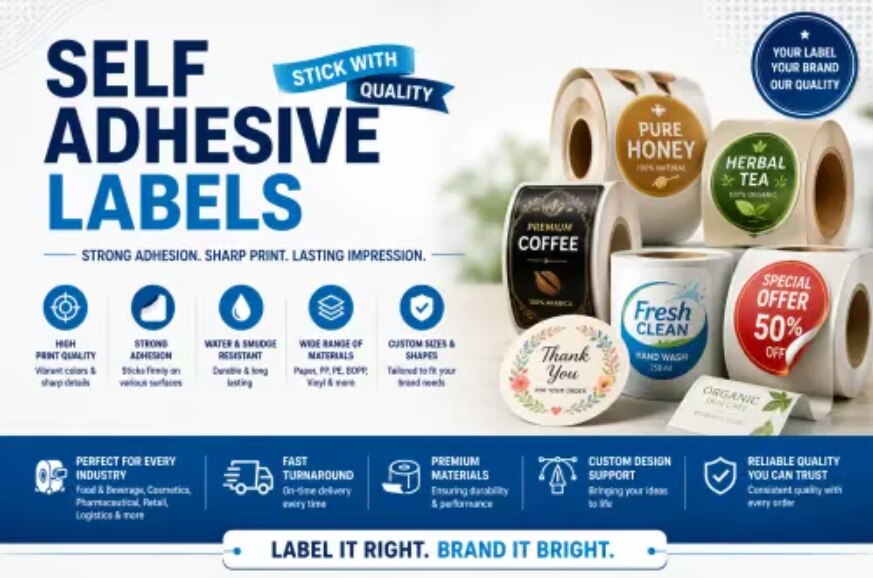
What are self adhesive labels for Mizoram businesses? Self adhesive labels Mizoram businesses use are pressure-sensitive labels: a tacky adhesive bonds when you press the label onto a surface, without water, solvent activation, or heat. Local manufacturers, food processors, pharmacies, retailers, and small producers use them to identify, sell, track, and dispatch packaged goods.
| Label purpose | Information carried | Common use |
|---|---|---|
| Product identification | Product name, variant, size, or strength | Bottles, jars, cartons, and pouches |
| Branding | Logo, colours, product claims, and contact details | Consumer-facing packs from manufacturers and small producers |
| Ingredients and declarations | Ingredients where applicable, net quantity, dates, and licence details | Food processors and packaged-goods sellers |
| Batch control | Lot or batch number and manufacture or expiry date | Medicines, food, cosmetics, and processed goods |
| Pricing and retail sale | Maximum retail price and selling information | Retail packs handled by shops and pharmacies |
| Barcode and tracking | Scannable product or inventory code | Retail checkout and stock control |
| Dispatch information | Recipient, address, handling marks, and shipment reference | Shipping cartons and outer packs |
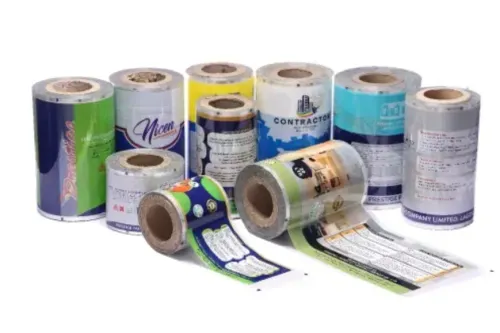
Suppliers provide these labels as rolls for label dispensers or automatic applicators, sheets for hand application and office printing, or fan-folded stacks for high-volume manual use. Choose the format that matches your labelling speed, equipment, and pack quantity.
How to apply labels and choose a face material for Mizoram conditions
A pressure-sensitive label bonds through pressure, so surface preparation controls the result. Wipe away dust, oil, and moisture, then dry the container completely. Remove the release liner without touching the adhesive, align one edge, and apply the label gradually rather than dropping it flat.
- Start at one edge and press outward across the surface with a squeegee, roller, or firm fingertip.
- Work around curves slowly; excessive tension causes flagging and lifted corners.
- Press the edges again, then allow adhesive dwell time before chilling or transporting the pack.
- Reject application on wet, dusty, or cold surfaces; humidity and monsoon rain encourage bubbling, wrinkling, and edge lift.
| Face material | Best use | Mizoram risk or trade-off |
|---|---|---|
| Paper | Dry indoor cartons, jars, and secondary packs | Absorbs moisture, wrinkles, and loses dimensional stability |
| BOPP | Moisture, condensation, oil, and scuff exposure | Less conformable than PE on flexible packs |
| PET | Abrasion, handling, and demanding print surfaces | Stiffer and less forgiving on curves |
| PE | Flexible pouches and packs with folds or movement | Softer face stock needs controlled application to avoid creases |
For pressure sensitive labels mizoram distribution, specify water or condensation resistance, print-rub resistance, storage conditions, and acceptable roll condition rather than simply requesting “waterproof.” Humid storage, cold rooms, dusty handling, and rough transport expose weak liners, cracked face stock, ink scuffing, adhesive ooze, and edge lift.
Choose self adhesive labels mizoram businesses can apply consistently: paper suits dry interiors, while film is safer for refrigeration, oil, rain, and condensation. Film does not rescue a contaminated surface or unsuitable adhesive.
How adhesive choice changes with the container and reuse requirement
Glass usually accepts a permanent acrylic or rubber-based adhesive quickly, but that same bond can tear a returnable bottle’s surface or leave residue during washing. Choose removable or repositionable adhesive when containers must be returned, relabelled, or cleaned for reuse.
| Container or surface | Suitable adhesive choice | Main risk |
|---|---|---|
| Glass | Permanent for one-way packs; removable for returnable bottles | Clean removal becomes difficult after water, heat, or long storage |
| PET | Permanent acrylic after a clean, dry application | Condensation and curved surfaces can cause edge lift |
| HDPE or PP | High-tack adhesive qualified for low-energy plastic | A glass-grade adhesive may never build enough bond |
| Corrugated carton | Permanent adhesive matched to porous board | Removal can pull fibres; dust reduces contact |
| Laminated pouch | Permanent adhesive with a conformable film label | Stiff paper or brittle varnish cracks at folds and gussets |
| Textured or dusty surface | High-tack adhesive only after removing loose dust | Roughness creates tunnels, voids, and flagging |
For adhesive labels for product packaging, test the actual container, not just a datasheet. Humidity, monsoon transport, condensation, and dusty handling matter for pressure sensitive labels mizoram. A permanent adhesive suits a one-way pack; removable suits clean separation; repositionable suits alignment or relabelling, but neither replaces surface cleaning.
On a pouch, use a flexible face stock with flexible ink and varnish, or folds will crack the print and lift the label. Expect higher cost and harder recycling separation.
What to include in a label specification and how to test samples
Give the supplier a specification that describes the pack, the label, the application process, and the information to be printed. For self adhesive labels Mizoram businesses use in humid distribution, “waterproof” alone is not precise enough.
- Container material and surface: glass, PET, HDPE, PP, corrugated board, pouch film, or textured stock.
- Label width and height, plus roll or sheet format.
- Core size, outside roll diameter, and winding direction.
- Print colours, finish, and required quantity.
- Manual, semi-automatic, or automatic application method.
- Barcode type, symbol size, quiet zones, and variable fields such as batch number, manufacturing date, expiry date, price, or serial number.
Test adhesive labels for product packaging on the actual container, not only against a datasheet.
- Apply samples at the intended application temperature after cleaning and drying the surface. Check alignment, full contact, edge lift, flagging, tunnelling, and bubbles after 24 and 72 hours.
- Chill, wet, or expose the pack to condensation when refrigeration, monsoon handling, or wash-down is expected. Record whether the label wrinkles, peels, or develops adhesive ooze.
- Rub the printed surface with a dry and damp cloth. Specify the required print-rub performance and inspect ink scuffing, face-stock cracking, and varnish damage.
- Check roll condition: clean die-cuts, even winding, no telescoping, crushed edges, liner tears, or excessive tension.
- Scan the barcode before and after handling. Request ISO/IEC 15416 verification for linear barcodes when scanning reliability matters; verify symbol contrast, magnification, quiet zones, and substrate reflectivity.
Crystal Vision Packaging Co can use these recorded results to match label stock, finish, and adhesive to the container rather than guessing from appearance.
Related product
 | Self Adhesive Labels Self Adhesive Labels In Nagpur Self Adhesive Labels are pressure-sensitive labels that stick to surfaces without the need for heat, water, or additional glue. View product → |
How to keep regulatory text and artwork usable on the finished pack
Approve artwork only after checking every declaration against the product category and sale destination. For anyone asking what are self adhesive labels for mizoram, the same rule applies to adhesive labels for product packaging: the label printer produces the approved design, but the brand owner remains responsible for regulatory review.
- For packaged food, verify the product name, ingredients where applicable, net quantity, lot or batch number, date information, manufacturer or marketer details, and the applicable FSSAI registration or licence information.
- For medicines, confirm the required drug name, strength, dosage information, batch number, manufacturing and expiry dates, licence details, and warnings before release.
- For retail goods, check net quantity, maximum retail price, manufacturer or packer name and address, and other declarations under the current Legal Metrology rules and any commodity-specific exemption.
- For exports, name the destination country or market. Export quality is not a technical specification; destination rules determine language, units, warnings, recycling marks, food declarations, and barcode requirements.
Reserve space for each mandatory language before sizing the label. A second language can shrink essential text or remove the blank barcode quiet zones that scanners need.
Send the supplier one approved artwork file and a written durability specification covering substrate, application conditions, print finish, and resistance to moisture, rubbing, condensation, or oil. Test the finished pack, not only the digital proof.
Frequently asked questions
What are self-adhesive labels for Mizoram businesses?
They are pressure-sensitive labels with a tacky adhesive that bonds when pressed onto a container, without water, solvents, or heat activation.
How should you choose a label face material for Mizoram conditions?
Choose the face material according to moisture, condensation, handling, storage, and print-legibility demands; use a moisture-resistant option for humid or chilled environments.
How does adhesive choice change with the container and reuse requirement?
Match adhesive performance to the container material, surface texture, curvature, oil or dust exposure, and whether the label must remain permanent or be removed for reuse.
What should a label specification include before ordering samples?
Specify label size, shape, face material, adhesive type, liner, printing, colours, regulatory text, application surface, storage conditions, and required performance tests.