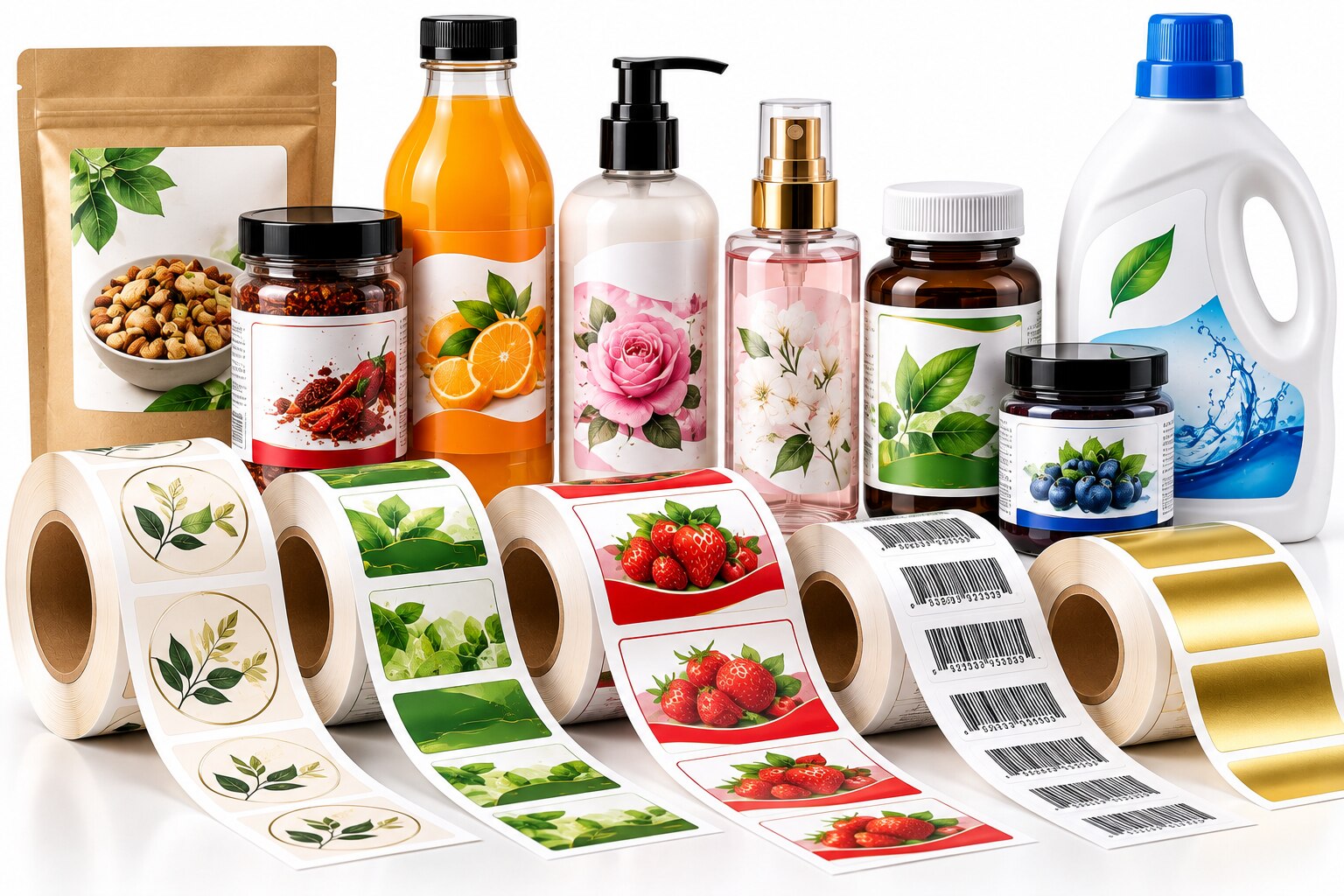
A label order can fail even when the artwork is correct: the roll may unwind the wrong way, the adhesive may lose tack on a cold bottle, or condensation may lift the corners after dispatch. By the end, you will have a practical specification for dimensions, materials, application, testing, artwork approval, supplier checks, and delivery to Himachal Pradesh.
Key takeaways
- Measure the application panel, including curves, seams, folds, and cap clearance.
- Match face material and adhesive to moisture, cold storage, and rough handling.
- Approve artwork, batch fields, licences, and regulatory text before printing.
- Request roll samples and test application, adhesion, dispensing, and unwinding.
What dimensions and roll details belong in the purchase order?
Measure the container at the actual application panel, not across its widest point. For a bottle or jar, record the straight area, curved radius, taper, mould seam, shoulder and cap clearance; for pouches and cartons, mark folds, gussets, edges and any required overlap.
Crossing a seam or entering a shoulder can wrinkle the label, while excessive overlap can create a raised edge that flags.
1. Convert those measurements into adhesive label specifications: finished width and height, corner radius, label gap or pitch, butt-cut requirement, and tolerances for width, height, die-cut position, print-to-cut registration and gap.
2. For hand-applied custom adhesive labels, state total quantity and preferred quantity per roll. For machine-fed rolls, confirm the applicator’s label spacing, liner strength, web handling and dispensing direction before approval.
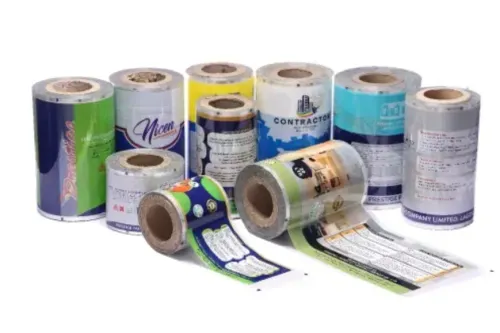
3. Put the mechanical roll format in writing: core internal diameter, maximum outer roll diameter, roll direction, unwind direction, winding orientation, splice policy and roll-to-roll identification. These details determine whether the roll runs or jams.
4. Approve retained samples against the applicator’s limits. Incorrect dimensions create setup waste, rework, extra freight and unusable stock, even when the printed artwork looks correct.
A self adhesive label order that omits these fields leaves “custom” open to interpretation.
Which face material and adhesive suit cold, wet, and rough handling?
Choose the face material by exposure: paper suits dry, short-life packs, while BOPP or PET suits condensation, refrigeration, abrasion, oil, sunlight, and temperature cycling. Paper costs less and prints well, but absorbs water and changes dimension. BOPP resists moisture and flexing; PET adds stiffness, opacity options, and stronger resistance to scuffing and heat.
| Face material | Strength | Best fit |
|---|---|---|
| Paper | Low cost, excellent printability | Dry cartons and indoor storage |
| BOPP | Water, oil, abrasion, and refrigeration resistance | Bottles, chilled packs, and wet handling |
| PET | High stiffness, durability, and dimensional stability | Rough handling, sunlight, and temperature cycling |
| Other film | Performance depends on grade | Ask for test data, not a generic film name |
Put these adhesive label specifications in the order:
- Application temperature, end-use temperature, humidity or condensation exposure, and expected storage period
- Adhesive grade or coat weight, liner, varnish or laminate, opacity, and face thickness
- Surface and use: glass, coated carton, textured glass, powder-coated metal, HDPE, LDPE, PP, or recycled plastic
HDPE and PP are low-surface-energy plastics; use an adhesive qualified for them, not one proven only on glass. Separate initial tack from service-temperature resistance, and require supplier values with the stated dwell or conditioning period. Permanent, removable, repositionable, freezer-grade, and hot-melt adhesives serve different surfaces; permanent adhesive can obstruct container reuse or recycling.
These details matter in adhesive labels for Himachal Pradesh, where cold application, condensation, hill-road rubbing, and outdoor storage expose weak choices quickly.
How should you test application, adhesion, and roll performance?
Qualify custom adhesive labels on filled production containers before approving a full order. Test the actual mould texture, curvature, taper, squeeze, and surface treatment—not a flat sample. Clean away dust, oil, moisture, mould-release residue, and condensation, then apply labels at the intended application temperature.
- Inspect immediately for initial tack, bubbles, wrinkling, tunnelling, flagging, seam lift, and corner lift.
- Recheck after 24 to 72 hours.
- Expose samples to refrigeration, moisture, rubbing, and temperature cycling.
- Repeat inspection after transport-style handling in the intended carton or pallet configuration.
Use the tests below to ask a self adhesive labels supplier the right question:
| Test | Answers | Procurement question |
|---|---|---|
| Peel adhesion | Removal force after a defined dwell | Will the label stay bonded? |
| Loop tack | Initial grab during brief contact | Will it stick quickly during application? |
| Shear | Resistance to sustained load | Will it resist sliding or creep? |
A single peel figure cannot qualify a curved bottle, cold wet pack, or fast applicator. Test hand application separately from the machine process, recording liner release, dispensing direction, roll orientation, label gap, web tension, and operating speed. Store samples sealed away from heat, sunlight, dust, and moisture; acclimatise them to the application room before opening.
Record the supplier’s application and service-temperature ranges, conditioning time, adhesive grade, liner, and required varnish or laminate.
What artwork, print, and regulatory information must be approved?
Send the printer the editable artwork, dieline, approved copy, barcode data, colour references, and signed approval. For custom adhesive labels, lock these adhesive label specifications before production:
1. Confirm finished size, bleed, safe area, print-side orientation, minimum text size, white ink, metallic effects, varnish, laminate, opacity, colour references, and die-cut tolerance. State whether the label faces outward or prints on the adhesive side.
2. Approve the barcode at final production size. Check quiet zones, contrast, correct symbology, and a verifier report to ISO/IEC 15416 for linear codes or ISO/IEC 15415 for two-dimensional codes. A phone scan alone is not sufficient.
3. Approve both a digital artwork proof and a production-like colour or press proof. Heavy ink coverage, UV varnish, metallic effects, and lamination can change scuffing, curl, flexibility, and recyclability, especially when labels rub during transport.
4. Ask your regulatory adviser to verify the product name, ingredients, allergens, nutrition information, batch or lot number, manufacturing and expiry dates, net quantity, warnings, manufacturer or marketer details, MRP, consumer-care details, and other declarations. Check food labels against applicable Food Safety and Standards requirements and packaged commodities against Legal Metrology declarations.
5. For food-contact applications, obtain a declaration of compliance stating the intended food, temperature, and contact conditions. “Food-grade” without supporting documentation is not an adequate specification.
When are adhesive labels better—or worse—than other formats?
Choose pressure-sensitive adhesive labels when you need targeted front, back, or panel decoration, frequent artwork changes, and simpler application equipment. For adhesive labels for Himachal Pradesh, match the format to the container, line speed, and removal requirement—not just the unit price.
| Option | Shape and coverage | Equipment, setup and changeover | Durability and removability |
|---|---|---|---|
| Adhesive label | Flat panels, moderate curves; targeted coverage | Lower setup; flexible artwork; applicator or hand application | Good with matched construction; removable grades available |
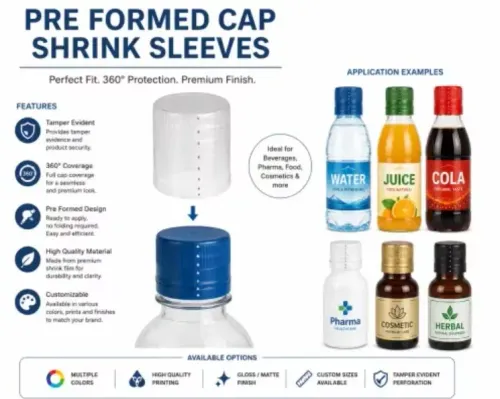
| Shrink sleeve | Complex shapes; full 360-degree coverage | Sleeve tunnel and applicator; more setup | Strong coverage; difficult removal |
| Wrap-around label | Cylindrical containers; broad coverage | Dedicated roll-fed or glue equipment | Efficient at volume; limited removability |
| In-mould label | Decoration formed into the container; integral finish | Mould and in-mould system; high setup | Highly durable; not removable |
| Heat-transfer label | Direct decoration on suitable surfaces | Transfer head and controlled tooling | Clean appearance; limited substrate flexibility |
Avoid adhesive labels across heavy mould lines, extreme tapers, tiny application areas, continuous immersion, severe abrasion, or when decoration must be moulded into the container. A sleeve earns its cost for 360-degree graphics; in-mould or heat-transfer decoration earns it when permanence and integration matter.
- Film, lay-flat width, seam, shrink direction, shrink percentage, perforation, and applicator compatibility.
- Artwork revisions, die or plate charges, sampling, setup, waste, freight, and rework from incorrect roll format.
How do you vet a supplier and plan delivery from Nagpur?
Compare a self adhesive labels supplier on evidence, not a quotation. Require material and adhesive data sheets, application and service-temperature ranges, filled production-container samples, a colour or press proof, ISO/IEC 15416 or 15415 barcode verification, and roll inspection records.
| Supplier evidence | What to check | Why it matters |
|---|---|---|
| Construction | Approved face material, adhesive, liner, finish, and application temperature | Prevents substitutions that fail in cold or condensation |
| Production | Samples, colour proof, barcode report, retained roll records | Confirms performance at actual size and format |
| Control | Written tolerances for width, height, registration, die-cutting, gap, and quantity | Prevents applicator faults and short deliveries |
Put artwork and regulatory approval responsibilities in the purchase agreement. Define replacement terms for curl, telescoping, missing labels, print defects, adhesive failure, and liner problems; also state minimum order quantity, repeat-order controls, freight responsibility, and dispatch schedule.
For adhesive labels for Himachal Pradesh, ask how rolls resist moisture and crushing, how cartons are protected from mountain-road vibration and rubbing, and who files damage claims. Check seasonal cold, storage temperature, condensation, outdoor exposure, and delivery buffer. Keep rolls sealed until acclimatised, then protect them from contamination.
Crystal Vision Packaging Co should be assessed against these documentary, sampling, tolerance, packing, and replacement controls rather than price alone.
Related product
 | Self Adhesive Labels Self Adhesive Labels In Nagpur Self Adhesive Labels are pressure-sensitive labels that stick to surfaces without the need for heat, water, or additional glue. View product → |
Frequently asked questions
What dimensions and roll details belong in an adhesive label purchase order?
Specify label width and height, corner radius, gap, winding direction, core diameter, maximum roll diameter, quantity per roll, and the required label orientation. Measure the actual application panel, including curves, seams, folds, gussets, and cap clearance.
Which adhesive label materials suit cold, wet, and rough handling?
Choose the face material and adhesive together. Film faces such as BOPP or polyester resist moisture better than ordinary paper, while a permanent adhesive needs testing on the actual container at its lowest storage temperature and after condensation or abrasion.
How should you test adhesive labels before placing a full order?
Run samples through the real applicator or apply them by hand to production containers. Check placement, edge lift, bubbles, wrinkles, adhesion after cold and wet exposure, roll unwinding, splice handling, and barcode readability.
What artwork and regulatory information must be approved?
Approve the final die line, dimensions, bleed, colours, fonts, barcode size, variable fields, batch and expiry areas, manufacturer details, licence information, declarations, and language versions before printing.
When are adhesive labels better or worse than shrink sleeves?
Adhesive labels suit containers with a defined application panel, lower decoration coverage, and straightforward application. Shrink sleeves suit contoured packs and 360-degree graphics, while labels are worse when seams, severe taper, condensation, or full-body decoration causes lifting or alignment problems.
Keywords