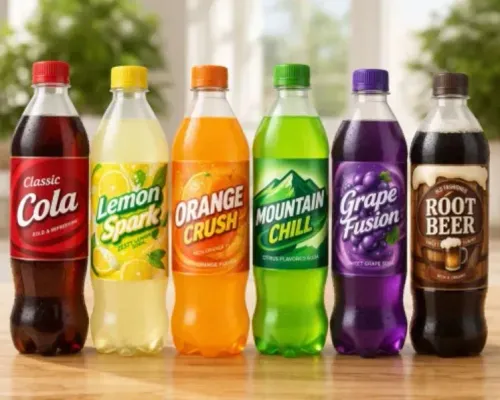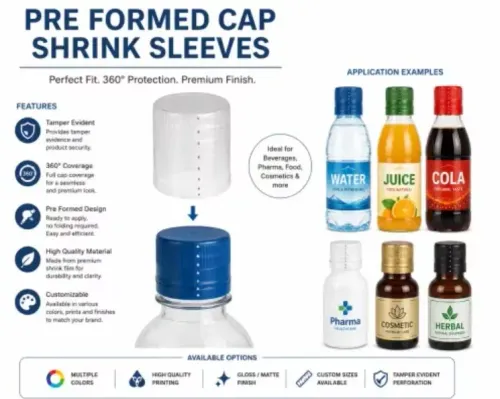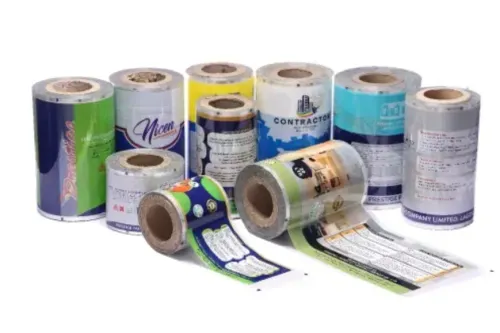

A bottle label is often one of the first things a customer notices about a packaged product. Yet good labelling involves much more than visual design. Bottle Labels need to fit the container correctly, remain readable and support the practical conditions a product experiences during handling, storage and distribution.
For manufacturers and brands in Karnataka, choosing bottle labelling should begin with the packaging application rather than artwork alone.
Start With the Bottle Itself
Bottle material, shape and surface characteristics influence label selection. A label intended for a straight plastic bottle may have different requirements from one being developed for a curved container or another packaging surface.
Before requesting production, determine:
- Bottle dimensions
- Available labelling area
- Container material
- Surface characteristics
- Filling and packaging conditions
- Storage environment
- Expected distribution conditions
Accurate information at this stage reduces the risk of ordering labels that look correct in artwork but do not perform as expected on the actual bottle.
Readability Is as Important as Appearance
Customers should be able to identify the brand and understand important product information quickly. Overcrowding a label with decorative elements can reduce readability.
A practical hierarchy normally gives priority to the product name and brand identity, followed by supporting details such as quantity, ingredients, instructions and other required information.
Small text should remain legible after printing rather than being judged only from enlarged digital artwork.
Evaluate Print Quality Across Quantities
A good sample is useful, but manufacturers should also consider consistency during larger production runs.
Important areas to review include colour reproduction, print registration, cutting accuracy and dimensional consistency. When several product variants share the same brand identity, stable colour reproduction becomes particularly important.
Crystal Vision Packaging Co supports businesses with printed labelling requirements across different packaging applications. Karnataka companies evaluating a label manufacturer can benefit from providing complete specifications and discussing the intended application before production.
Avoid Choosing Only by Appearance
A visually impressive label that lifts, wrinkles or becomes difficult to read during actual use does not serve the product effectively.
Testing labels on filled or representative bottles can provide a clearer picture of real-world performance. Businesses should observe how the label fits, whether graphics align correctly and whether the overall package remains presentable under expected conditions.
For products distributed throughout Karnataka and potentially into wider markets, bottle labels become part of both brand communication and packaging functionality.
Taking time to evaluate the bottle, printing requirements, application conditions and finished presentation helps manufacturers make a more informed labelling decision and reduces unnecessary packaging changes after commercial production begins.
Keywords